





 +91 88949 00142
 +1 (307) 435-9605
Businesses today rely on dozens of software applications—from CRMs and ERPs to payment gateways, customer portals, mobile apps, and AI tools. The challenge isn't just building these systems; it's making them communicate efficiently . This is where API-first development has become a game changer. Instead of treating APIs as an afterthought, organizations design them first, creating software that's scalable, integration-ready, and future-proof . Whether you're building a SaaS platform, enterprise application, or AI-powered solution, adopting an API-first strategy can significantly improve development speed and long-term flexibility.
API-first development is reshaping how businesses build software, enabling faster integration and innovation. This guide explores its benefits, implementation strategies, and common pitfalls to help you stay competitive in the digital landscape.
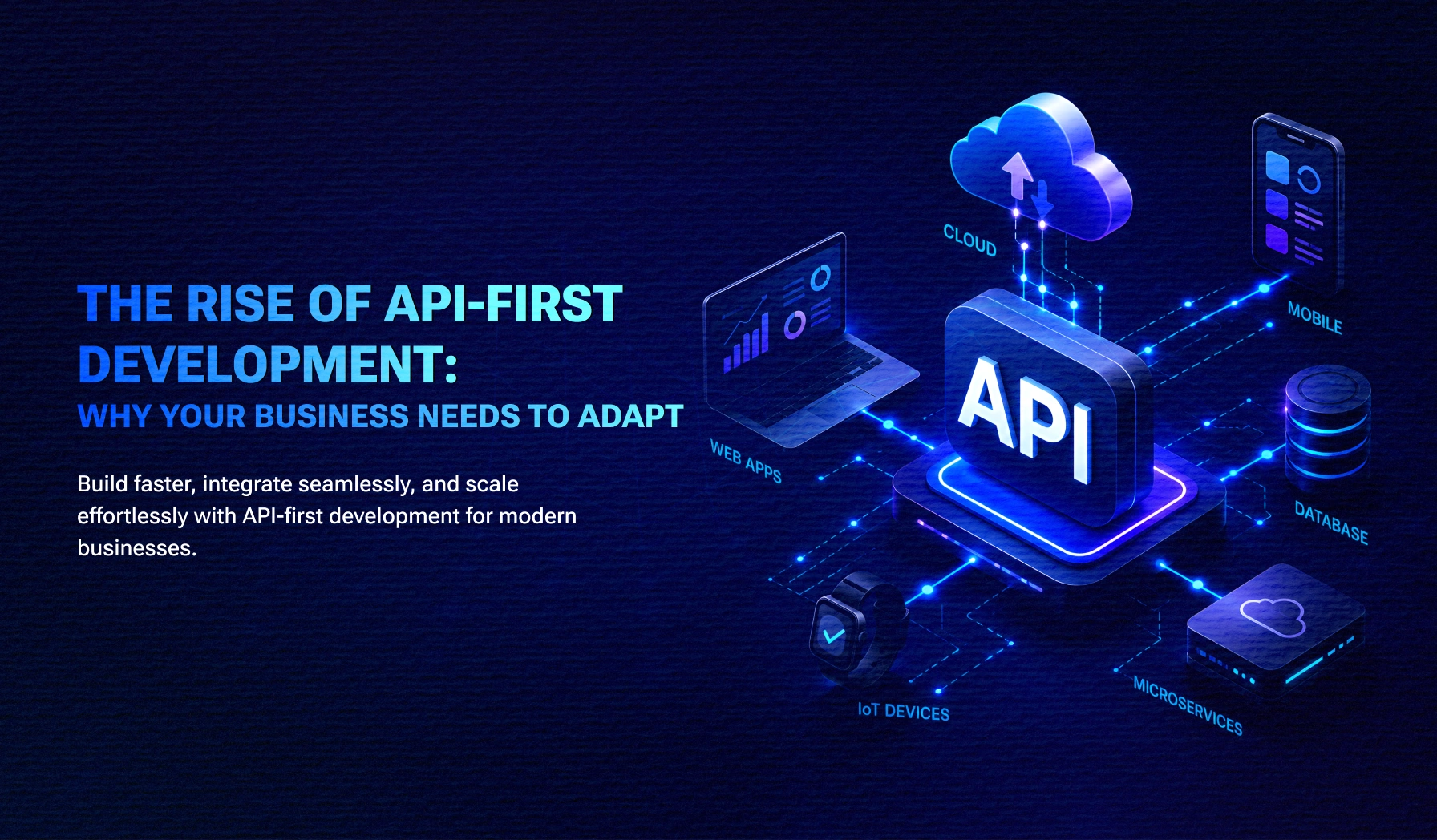
What is API-First Development ?🔗
API-first development is a software design approach where APIs (Application Programming Interfaces) are planned, designed, and documented before application development begins.Rather than building the frontend and backend independently and creating APIs later, developers establish a clear API contract first. This allows frontend, backend, mobile, and third-party teams to work simultaneously while maintaining consistency. Unlike traditional development approaches where APIs are introduced after the application is built, API-first development treats APIs as the foundation of the software architecture. This ensures that every system component communicates through standardized interfaces, making applications easier to integrate, maintain, and scale as business requirements evolve.
Why API-First Development Matters Now More Than Ever🔗
API-first development shifts the focus from traditional software development to an approach where Application Programming Interfaces (APIs) serve as the foundation of the entire software architecture. Instead of treating APIs as an afterthought, businesses design them first, enabling greater flexibility, improved collaboration, and long-term scalability. This approach allows development teams to work simultaneously on frontend, backend, mobile, and third-party integrations, accelerating project delivery while reducing dependencies. APIs also make it easier to adapt applications to changing business requirements without requiring major system overhauls. As modern organizations increasingly rely on interconnected digital ecosystems rather than standalone applications, API-first development has become essential. Whether integrating payment gateways, cloud platforms, AI services, customer relationship management (CRM) software, or enterprise resource planning (ERP) systems, APIs enable seamless communication between applications. By planning these integrations from the outset, businesses can reduce development bottlenecks, simplify system connectivity, and respond more quickly to evolving market demands and customer expectations.How API-First Development Works🔗
At its core, API-first development begins with designing and documenting APIs before any application code is written. Instead of building the frontend and backend first and creating APIs later, development teams establish a well-defined API contract that specifies endpoints, request and response formats, authentication methods, data models, and expected behaviors. This contract acts as a blueprint for the entire development process, ensuring consistency across all components of the application. Once the API design is finalized, developers build secure, reliable, and scalable APIs by following industry best practices and implementing robust security measures. Frontend, backend, mobile, and third-party integration teams can then work simultaneously using mock APIs or predefined specifications, eliminating unnecessary dependencies and reducing development bottlenecks. After the APIs are fully implemented, they are integrated seamlessly with user interfaces, backend services, databases, and external systems to create a cohesive application. This parallel development approach not only improves collaboration and accelerates product delivery but also enhances code quality, simplifies testing, and makes future updates, integrations, and feature enhancements significantly easier to implement. By treating APIs as the foundation of the application architecture, businesses can build software that is more scalable, maintainable, and adaptable to evolving technological and business requirements.Business Benefits of Adopting an API-First Approach🔗
Transitioning to an API-first development model offers numerous advantages:
- Faster Time to Market: Enable parallel development across frontend, backend, and mobile teams, reducing project timelines and accelerating product launches.
- Improved User Experience: Seamlessly integrate with third-party services and platforms to deliver faster, more reliable, and connected digital experiences.
- Cost Efficiency: Minimize development rework and integration complexity, reducing both implementation and long-term maintenance costs.
- Future-Proof Architecture: Build reusable, scalable APIs that support future applications, digital services, and evolving business requirements.
- Simplified Third-Party Integrations: Easily connect with cloud platforms, payment gateways, CRM systems, ERP software, AI services, and other external applications.
- Consistent Data Management: Standardized APIs ensure accurate, synchronized, and consistent data across multiple systems and platforms.
- Greater Development Efficiency: Reuse existing APIs across projects, reducing duplicate development efforts and improving overall productivity.
- Enhanced Scalability: Expand applications, introduce new features, or support growing user demands without redesigning your core architecture.
- Better Collaboration: A well-defined API contract enables frontend, backend, mobile, and third-party development teams to work simultaneously, improving coordination and reducing bottlenecks.
- Improved Security and Governance: Centralized API management makes it easier to implement authentication, authorization, monitoring, and compliance across all connected applications.
These advantages allow organizations to innovate faster while maintaining consistency across multiple digital channels. As businesses expand their technology stack, reusable APIs become valuable assets that support continuous growth without requiring major redevelopment efforts.
Challenges & Best Practices for Implementation🔗
While API-first development offers significant advantages, organizations may encounter several challenges during implementation. One of the most common obstacles is the initial learning curve, as development teams need to adopt new design methodologies, tools, and workflows centered around API specifications. Security is another critical consideration, since APIs often expose business data and services, making them potential targets for unauthorized access and cyberattacks if not properly secured. Additionally, integrating newly designed APIs with existing legacy systems, third-party platforms, and enterprise applications can be complex and may require careful planning to ensure compatibility and seamless communication. To overcome these challenges, businesses should invest in continuous training so development teams understand API design principles, documentation standards, security best practices, and lifecycle management. Implementing robust security measures such as OAuth 2.0, JSON Web Tokens (JWT), HTTPS encryption, rate limiting, and role-based access control (RBAC) helps protect APIs from vulnerabilities and unauthorized access. Organizations should also leverage API management platforms to simplify deployment, monitor performance, analyze usage, and maintain reliability. Equally important is establishing strong API governance by defining consistent naming conventions, versioning strategies, documentation standards, testing procedures, and security policies. A well-governed API ecosystem promotes collaboration across teams, ensures consistency, and enables businesses to build scalable, secure, and maintainable applications that can adapt to evolving business and technology requirements.Common Implementation Mistakes to Avoid🔗
When transitioning to an API-first approach, businesses often encounter common implementation mistakes that can impact the success of their applications. One of the most significant pitfalls is neglecting comprehensive API documentation, which can create confusion for developers, slow down integrations, and increase maintenance efforts. APIs should be clearly documented with endpoints, request and response formats, authentication methods, error codes, and usage examples to ensure a smooth development experience. Another frequent mistake is overcomplicating API design by introducing unnecessary endpoints, inconsistent naming conventions, or complex data structures that make APIs difficult to understand and integrate. Keeping APIs simple, intuitive, and consistent improves usability and encourages wider adoption. Businesses should also avoid overlooking feedback from developers, partners, and end users during the API design process, as their insights help identify usability issues and ensure the APIs effectively meet real-world requirements. Additionally, many organizations fail to plan for API versioning from the outset. As business needs evolve and new features are introduced, APIs must be updated without disrupting existing integrations. Implementing a well-defined versioning strategy allows organizations to enhance functionality while maintaining backward compatibility, minimizing downtime, and providing a seamless experience for both developers and API consumers. By avoiding these common mistakes, businesses can build reliable, scalable, and future-ready APIs that support long-term growth and innovation.
API Security: A Critical Component of API-First Development 🔗
As APIs become the primary communication channel between applications, security must be incorporated from the earliest stages of development. Businesses should implement secure authentication methods such as OAuth 2.0 and JSON Web Tokens (JWT), encrypt all API traffic using HTTPS, validate incoming requests, and enforce role-based access controls. Regular security testing, monitoring, and rate limiting further protect APIs from unauthorized access, cyber threats, and performance issues.
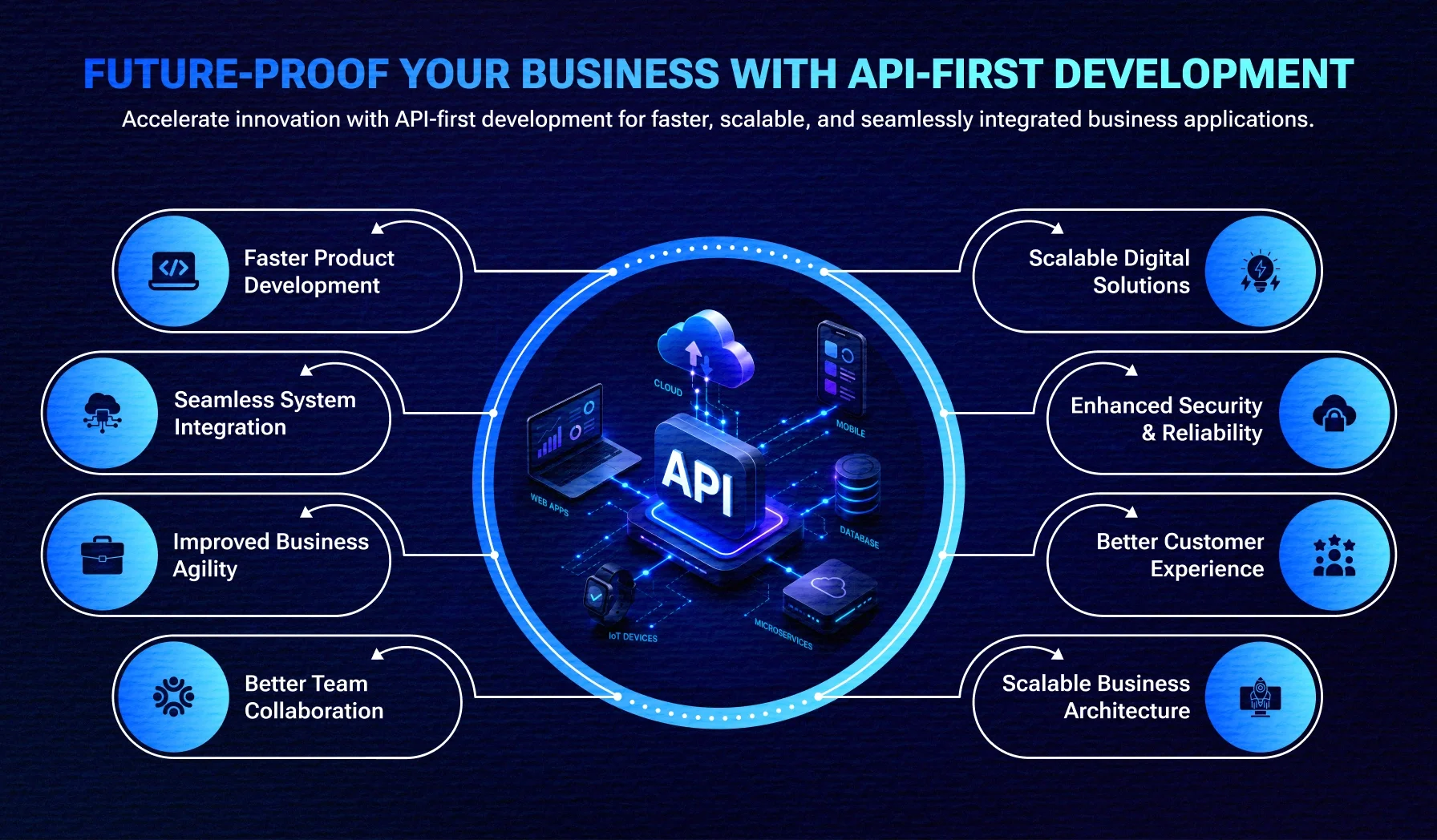
Future Outlook for API-First Development🔗
As organizations continue investing in cloud computing, microservices, artificial intelligence, and digital transformation, API-first development is becoming the preferred software architecture. Businesses that adopt this approach gain greater flexibility, faster innovation cycles, and the ability to integrate emerging technologies with minimal disruption. Rather than simply supporting today's requirements, API-first development prepares organizations for future growth and evolving customer expectations.
Your Practical Checklist for API-First Development🔗
How Suave Creators Helps🔗
At Suave Creators, we specialize in designing and developing API-first solutions that help businesses build scalable, secure, and integration-ready applications. From API strategy and architecture design to development, testing, deployment, and ongoing maintenance, our experienced team ensures every API aligns with your business objectives. Whether you're modernizing legacy systems, building cloud-native applications, or integrating AI-powered solutions, we deliver reliable APIs that support long-term digital growth.
Bottom Line🔗
API-first development is no longer just a technical trend—it's a strategic approach that enables businesses to innovate faster, integrate more efficiently, and scale with confidence. By designing APIs before building applications, organizations create flexible software ecosystems that are ready for future technologies, third-party integrations, and evolving customer expectations. Investing in an API-first strategy today positions your business for long-term success in an increasingly connected digital world.