




 +91 88949 00142
 +1 (307) 435-9605
The healthcare industry is evolving rapidly. Modern patients expect the same convenient, personalised experience when visiting their doctors or hospitals as they would receive from their preferred online retailers or banks. By 2025, providing high-quality medical care alone will not be sufficient, and every Stage of a Patient’s Journey, from booking an appointment to follow-up appointments, must be easy to navigate, efficient, and tailored to the patient's specific needs.
Why hospitals and clinics need custom CRM plus appointment automation in 2025 to reduce no-shows and improve patient flow.
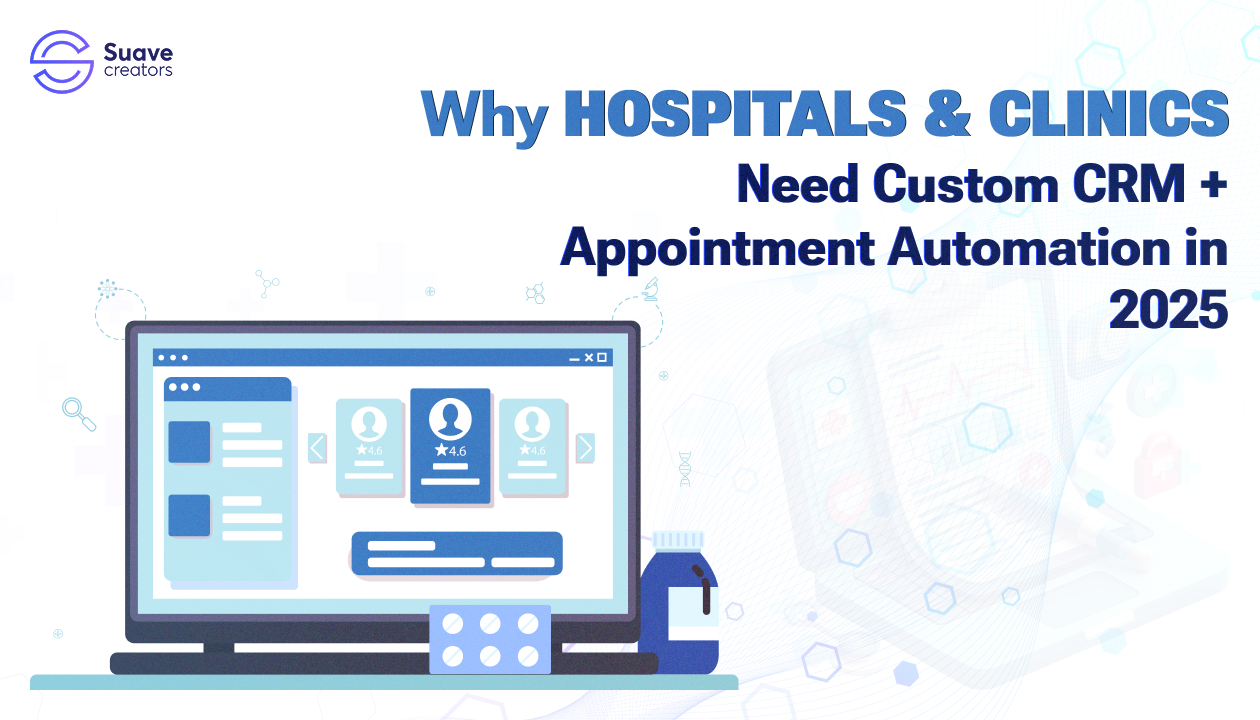
Therefore, hospitals and providers must implement a Custom CRM (Customer Relationship Management) system with the ability to automate the process of Scheduling Appointments, as these solutions will become increasingly needed as an effective way to manage patient interaction, increase staff productivity and remain competitively viable in today's marketplace.
Part 1: The Power of a Custom Healthcare CRM Development
A CRM is a useful strategic resource for healthcare organisations to organise their relationships with patients and potential patients. It consolidates patient information, provides streamlined communication, and creates an opportunity for healthcare facilities to provide customised care.
The Need for a Customised CRM Solution for Hospitals in 2025
A generic, retail sales or off-the-shelf CRM solution is not going to work optimally for the healthcare industry. Hospitals and clinics have specific needs in relation to securing sensitive patient data, as well as the complexity of the workflows required within the hospital.
Customised for Your Workflow: The workflow within your facility dictates how you will use the customised CRM. For example, the way you develop the scheduling process for your specialists, how you receive and process billing, etc. So, you can expect your staff to continue doing their job in the way they always have, as the customised CRM will adapt and adjust to your staff's needs.
Integration of Existing Systems (EHR / EMR): The most important part about your Electronic Health Record (EHR) or Electronic Medical Record (EMR) system is that it can easily integrate with your custom software (CRM), so all patients’ appointment history, clinical notes, and communication logs will work together seamlessly and will be kept secure in real-time.
Adherence to Applicable Laws (HIPAA, GDPR): Security for healthcare-related information is a must. When you build a custom system from the ground up, you will have the ability to ensure strict adherence to all applicable data privacy laws, such as HIPAA (for US-based) and the GDPR (for Europe).
How CRM Improves Patient Experience and Engagement
People today expect medical professionals to show their compassion for individual patients. A custom healthcare CRM development can provide more effective, individualised, patient-centric service to large numbers of patients simultaneously.
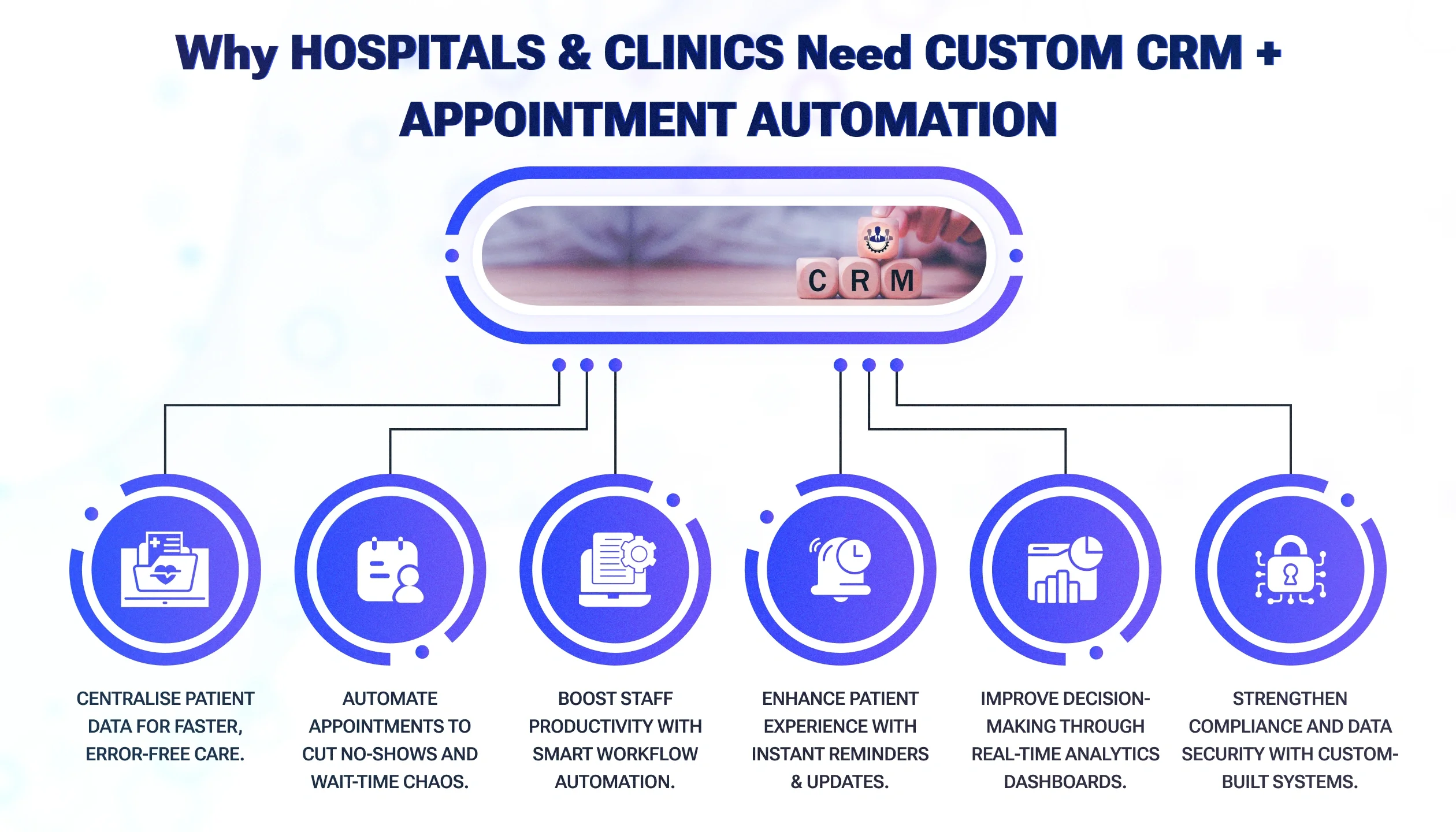
Centralised Patient Data (360-Degree View): A CRM can be a central repository representing every interaction with a patient. The CRM provides staff with complete access to a patient’s medical records, appointments, communication preferences (email/SMS), and billing information. This prevents staff from having to ask patients redundant questions and provides patients with a consistently informed service.
Personalised Patient Care and Communication: Each patient’s information can be stored in one place and used to create tailored interactions and communication.
Clinical Outreach to Patients: For example, if you want to reach out to your diabetic patients in your practice, you should send them information about managing diabetes directly, for which a clinic CRM software development is required.
Vaccination/Filled Appointment Reminders: Through a system in CRM, automatic reminders can be sent to the patients about their annual flu vaccinations or follow-up appointments.
Post Visit Follow Ups: Sending a message after a procedure allows you to check on the patient, gather information and promote continued loyalty.
Stronger patient loyalty leads to greater retention rates and an ongoing stream of return visits to the hospital when patients know they have a hospital management automation that follows up regularly and has complete issues documented in one central location.
Part 2: The Necessity of Appointment Automation Software
Missed appointments (no-shows) and manual scheduling are two of the most significant barriers to revenue and efficiency in the healthcare industry. Appointment booking automation software, an essential function of a modern-day customer CRM, addresses those barriers.
Benefits of Appointment Automation for Healthcare Operations
Administrative work can be greatly reduced due to automation, so your staff can concentrate more on the care of patients.
No-show reduction and schedule optimisation: Sending reminders through the patient's preferred means (e.g., SMS, e-mail, app notifications) has been shown to lower the number of patients that miss their appointment by 90% in some cases, keeping the clinic's schedule full and maximising the amount of time doctors have to work.
24/7 Online Booking: Patients may want the ability to make appointments at their leisure, without needing to contact any staff to make those arrangements. By implementing an online automated system that allows for self-service (to easily, quickly, and accurately make or change appointments) makes it possible for patients to schedule, manage and cancel their own appointments. The doctor’s schedule is always up to date.
Reduce Staff Burden: Automating both the process of confirming appointments with patients and the ability to conduct searches through paper-based logs has freed up time for the reception team to provide more personalised service to patients in person, in addition to assisting patients with more complicated issues.
Efficient Resource Allocation: By helping managers track current appointment trends as well as the availability of their providers (doctors), the automated appointment confirmation system provides management with a better understanding of how to allocate resources efficiently in order to minimise operating costs.
Automating the Patient Scheduling Process
Once 'clunky' in nature, the automated workflow has made for more streamlined processes for patients and providers alike:
Patients now have the ability to request services online and view what dates and times are available in real-time.
When patients make an appointment, they receive an immediate email/text confirming their appointment.
Important patient information (including Insurance information and Medical Records) can be submitted electronically before arrival, resulting in decreased wait times.
Final Thoughts
By the year 2025, thriving due to increased customer demand, continued pressure to reduce costs, and growing compliance requirements, adopting custom health care CRM development services and appointment automation systems becomes an incredibly important business decision. In many cases, it changes how hospitals and clinics operate from being reactive service providers to being a proactive collaborator in the patient's health journey. Custom development allows you to make sure that tools are optimised to meet your individual processes and the needs of your patients, leading to improved patient care, more efficient automation of your operations, and a more sustainable future for your hospital or clinic.
At Suave Creators, we create the ideal website to suit your business identity, goals, and audience. Using the latest technologies, clean designs, and a dedication to achieving results, we will create a website to improve your Digital Presence, improve the user experience, and help improve your company's Financial Performance. Your company deserves premium-quality service, and we are committed to providing it.