





 +91 88949 00142
 +1 (307) 435-9605
1. Know Your Audience and Retention Goals
Understand your customers’ buying habits and what keeps them coming back.
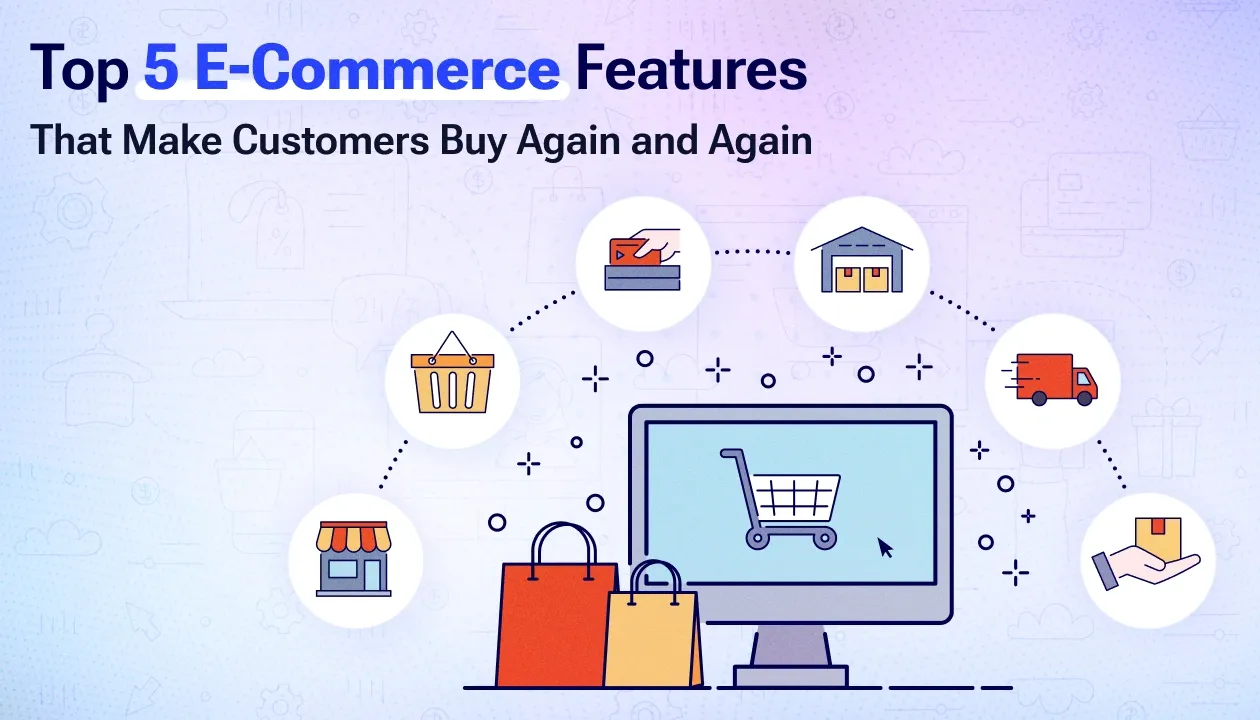
Want customers to keep coming back to your online store? Discover the top e-commerce features that build trust, create a smooth shopping experience, and turn first-time buyers into loyal customers. Explore the must-have functionalities that help boost sales and grow customer loyalty.
Define clear KPIs: repeat purchase rate, average order value (AOV), churn rate, and net promoter score (NPS).
Identify which features matter most for your audience: wishlists, one‑click reordering, subscription management, or AI‑driven recommendations.
2. Choose the Right E‑Commerce Stack
Select a platform (custom headless, Shopify Plus, Magento, or WooCommerce) that supports loyalty programs, AI personalisation, and CRM integration.
Consider performance, security, integration costs, and long‑term maintainability.
Ensure the stack is API‑first so you can easily add smart search (Algolia, Meilisearch) and personalisation engines (Nosto, Recombee).
3. Design for Repeat Purchases and Great UX
Implement one‑click reordering, wishlists, and tiered loyalty rewards (e.g., bronze, silver, gold).
Add smart search with predictive navigation and AI‑powered product recommendations.
Use asynchronous inventory updates to prevent overselling during flash sales.
Optimise mobile checkout with digital wallets (Apple Pay, Google Pay) and guest checkout options.
4. Monitor and Optimize Continuously
Track repeat customer rate, search success rate, mobile conversion, and personalisation click‑through rate (CTR).
Optimise personalisation algorithms, page speed, and checkout flows weekly.
Run A/B tests on loyalty reward placements, discount messaging, and cart abandonment email timing.
What is a Retention‑Focused and Feature‑Rich E‑Commerce Website?
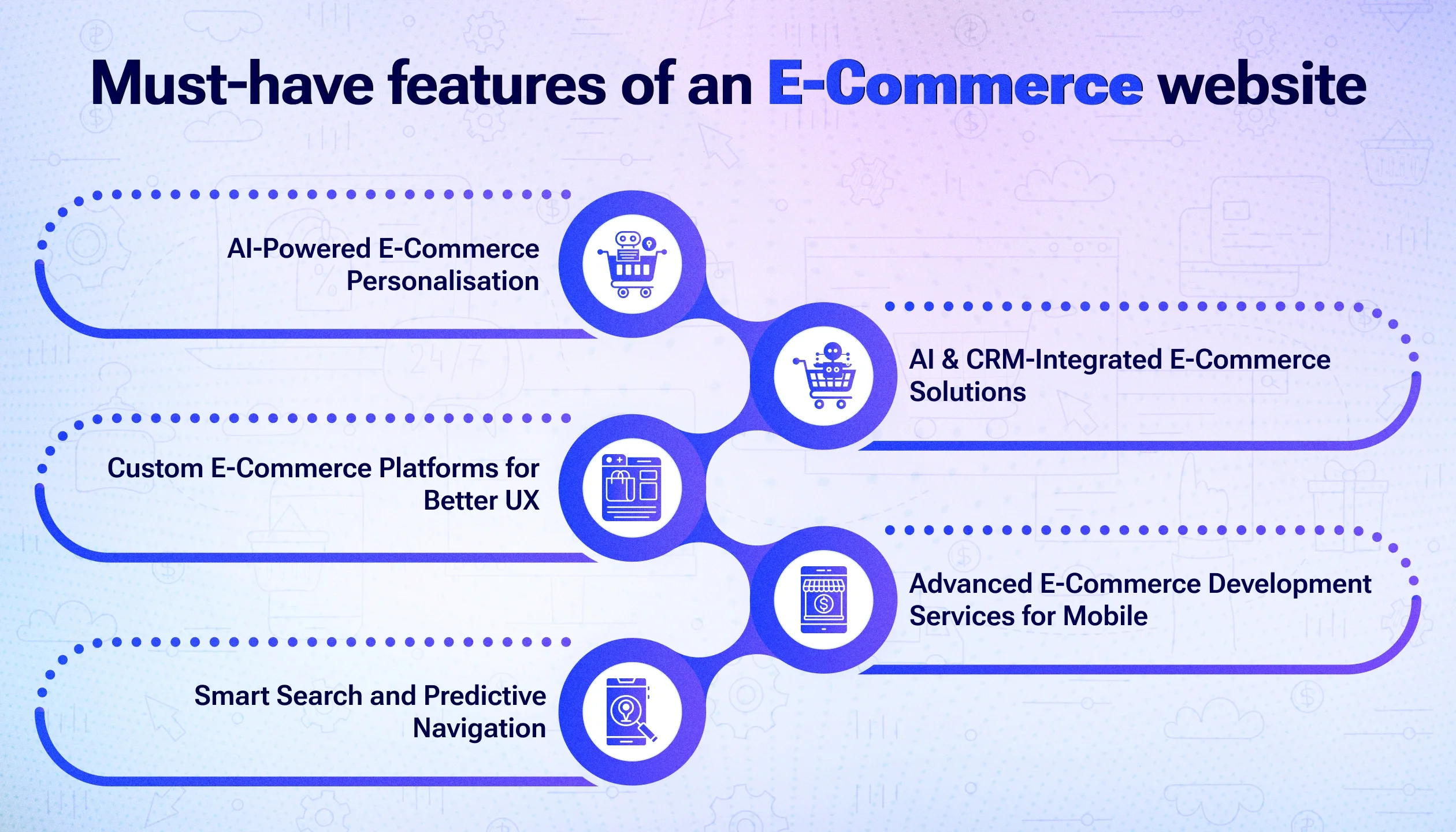
A retention‑focused e‑commerce website uses features like personalised recommendations, loyalty programs, and smart search to encourage repeat purchases. A feature‑rich website also includes AI personalisation, CRM integration, custom UX, and advanced mobile development – all working together to increase customer lifetime value and reduce cart abandonment.
Unlike a generic template store that treats all visitors the same, a truly scalable e‑commerce website adapts to each user’s behaviour. It remembers past purchases, predicts what they might want next, and makes reordering effortless. This is not just nice to have – it is essential for competing in 2026, where 70% of consumers expect personalised experiences and 53% will abandon a site that takes longer than 3 seconds to load on mobile.
The Architecture Decisions That Actually Matter
When it comes to building an e‑commerce website that drives repeat purchases and includes must‑have features, there are three key decisions that you need to make:
1. Choosing the Right Technology Stack
The choice of platform (headless vs. monolithic, cloud vs. on‑premise) directly impacts how easily you can add loyalty engines, AI search, and CRM integrations.
You need a stack that is scalable, API‑first, and supports real‑time personalisation. Avoid closed ecosystems that lock your data.
Example: A headlesscommerce setup (Next.js + Shopify Storefront API + Algolia + CRM) allows you to update the frontend without touching the backend, giving you speed and flexibility.
2. Designing for Scalability and Integration
Use microservices for cart, payment, loyalty, and recommendations so each can scale independently. When a flash sale hits, only your cart and payment services need to scale up – not your entire product catalog.
Avoid disconnected silos. Integrate your CRM, product database, and search engine into one unified data layer. This ensures that when a customer returns an item, your personalisation engine immediately stops recommending similar products.
Implement horizontal scaling from day one. Cloud platforms like AWS, Azure, or GCP offer auto‑scaling groups that add or remove servers based on real‑time traffic.
3. Monitoring and Optimization
Regularly monitor page load times (especially Largest Contentful Paint), search response times (aim for under 200ms), and personalisation click‑through rates.
Use tools like Lighthouse, New Relic, and cloud‑native dashboards (CloudWatch, Azure Monitor) to identify bottlenecks.
Set up automated alerts: if repeat purchase rate drops by 5% in a week, trigger a review of your loyalty program or checkout flow.
Conclusion
Building an e‑commerce website that makes customers buy again and again requires both the right features (personalisation, loyalty, smart search, CRM integration, mobile optimisation) and the right architecture (microservices, horizontal scaling, cloud auto‑scaling, API‑first design). By knowing your audience, choosing a scalable technology stack, designing for repeat purchases and great UX, and continuously monitoring performance, you can create an online store that grows with your business and keeps customers coming back for years.
The future of e‑commerce belongs to brands that treat every customer as an individual - not a number. Start with one or two high‑impact features, measure relentlessly, and scale what works. Your customers will reward you with loyalty, higher basket sizes, and enthusiastic referrals.