





 +91 88949 00142
 +1 (307) 435-9605
By 2026, buying online will be totally focused on the experience. A site that is slow or hard to navigate won't get any clicks because users will bail off in a flash. The success of an e-commerce website, whether new or renovated, hinges on the friendliness of its interaction with visitors and customers.
By 2026, buying online will be totally focused on the experience. A site that is slow or hard to navigate won't get any clicks because users will bail off in a flash. The success of an e-commerce website, whether new or renovated, hinges on the friendliness of its interaction with visitors and customers.

11 Essential Features of a High-Converting E-commerce Website
Let's take a look at 11 essential features your store needs to convert customers into lifelong supporters.
1. Mobile-First Responsive Design
Almost everyone purchases through their mobile phones when they are not at home. In case your website is inconvenient for a mobile user, those transactions will be gone immediately. By employing a mobile-first design, it is guaranteed that the buttons are simple to click and the writing is readable, thus, a trouble-free experience is delivered to all users irrespective of the devices they have.
2. Intuitive and User-Friendly Navigation
Shopping needs to be a flow with no hassles. It is your menu that should be so reasonable that customers wouldn’t have to think even for a second where to click. Make use of straightforward categories and “breadcrumbs” (such as Home > Shoes > Sneakers) in a way that customers can have an exact idea of their location and how to return at any time.
3. High-Quality Visuals and Engaging Videos
Photos should portray the products in the best light a,s customers are not able to physically check out your products. Employ clear, high-resolution pictures that allow customers to zoom in for details. If it’s possible, a short video of the product being used is the best thing; it conveys the exact look and movement of the item, thus gaining the trust necessary for the transaction to take place.
4. Smart Search and Advanced Filters
If you have more than twenty products, you need a search bar that actually works. Successful sites use “predictive search”, which suggests products as soon as the user starts typing. Additionally, advanced filters allowing people to sort by price, size, colour, or material save your customers time. The faster they find what they want, the faster they hit “Buy”.
5. Detailed and Personality-Filled Descriptions
Don’t only mention the facts. The defining features, such as size, are definitely of significance, but your descriptions need to show how the product is a wonderful option. Keep a friendly tone while highlighting the benefits. Instead of just saying “100% Cotton”, use phrases like “Soft and airy cotton to keep you cool”. The buyers need to visualise the product before buying.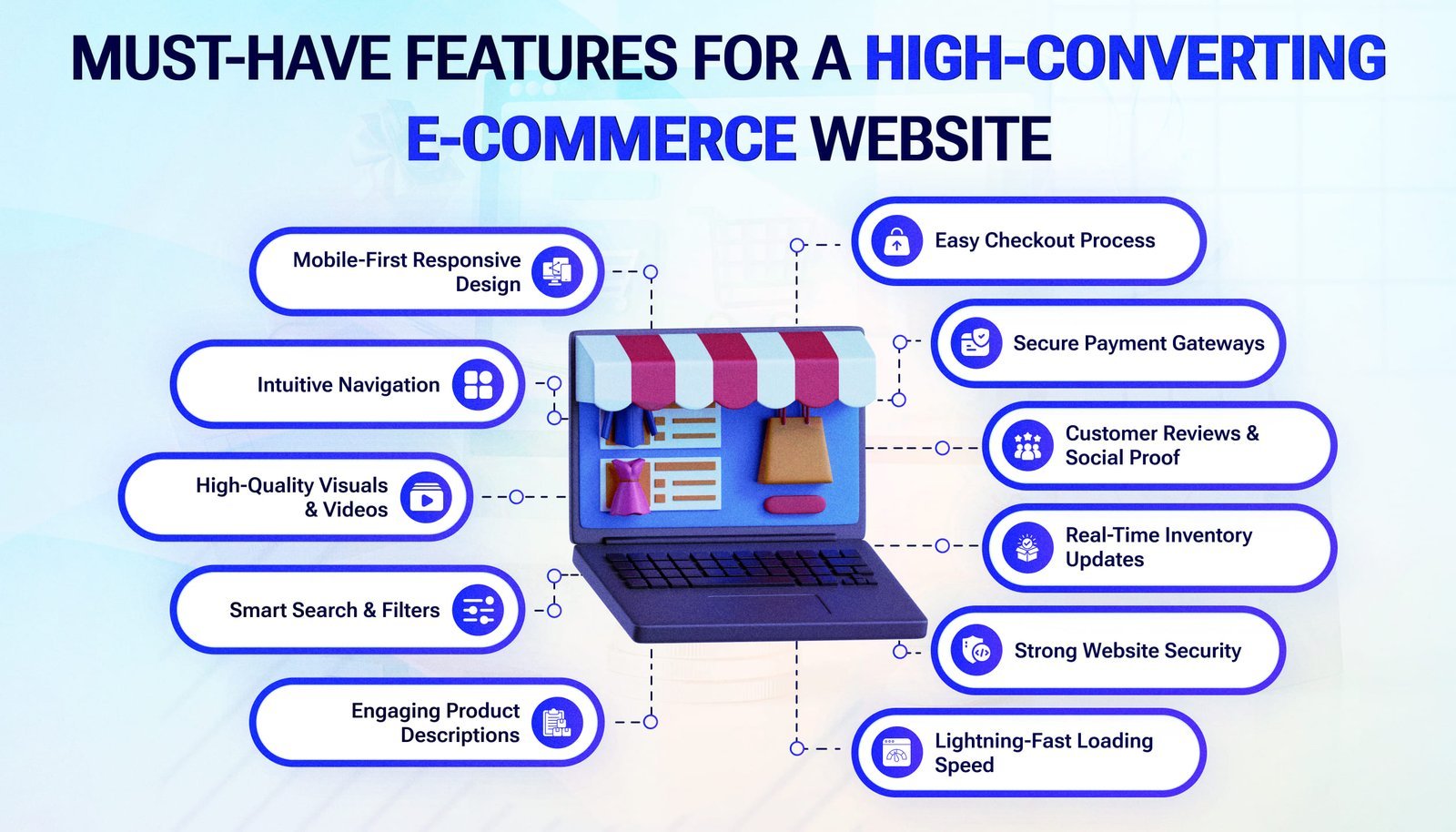
6. A User-Friendly Checkout Process
This is the “make or break” point. A lengthy checkout process can lead to abandoned carts by shoppers. To fix this, keep your forms short. Always offer a “Guest Checkout” option. Forcing someone to create an account and verify their email just to buy a pair of socks is a great way to lose a sale.
7. Secure Payment Gateway Integration
Security is the foundation of online business. You need a seamless payment gateway integration that supports a variety of options - credit cards, PayPal, Apple Pay, and even “Buy Now, Pay Later” services like Klarna or Affirm. When customers see familiar payment logos and a secure “https” URL, they feel safe sharing their financial information.
8. Customer Reviews and Social Proof
We are social creatures. We want to know what other people think before we spend our hard-earned money. Displaying honest customer reviews, including photos from real buyers, is one of the most powerful e-commerce site optimisationstrategies. Don’t be afraid of a few four-star reviews; they actually make your store look more authentic than a perfect string of five-star ratings.
9. Real-Time Inventory Management
There is nothing worse than getting excited about a product, adding it to your cart, and then getting an email two days later saying it’s out of stock. Your website should be synced with your warehouse. If an item is low in stock, show it! This not only prevents disappointment but also creates a “sense of urgency” that encourages customers to buy now rather than wait.
10. Robust and Visible Security
Online security remains the main concern of shoppers today. In order to genuinely create trust, it is not enough to simply show the “lock” icon; you should implement two-factor authentication and keep your software updated. Offering secure e-commerce solutions along with a precise privacy policy will allow customers to give their information willingly to complete their transactions.
11. Lightning-Fast Loading Speed
In 2026, patience is the last thing to expect from customers. If your site is taking more than a couple of seconds to load, you have lost the customer. Speed is a crucial part of shopping cart development. This involves optimising your images, using a fast server, and cleaning up any “heavy” code that might be dragging your performance down.
Read Our Blog : Php Development And Its Framework For Business
Conclusion
Creating a winning online store is not solely dependent on the visual aspect; it is more about the user experience. The aim is to offer a shopping journey that is effortless and safe, thereby making the presence of the technology invisible, and what remains is the delight of a great find. Customer satisfaction should be your only concern while running an online store. So use all of the 11 features while developing a reputable brand.