





 +91 88949 00142
 +1 (307) 435-9605
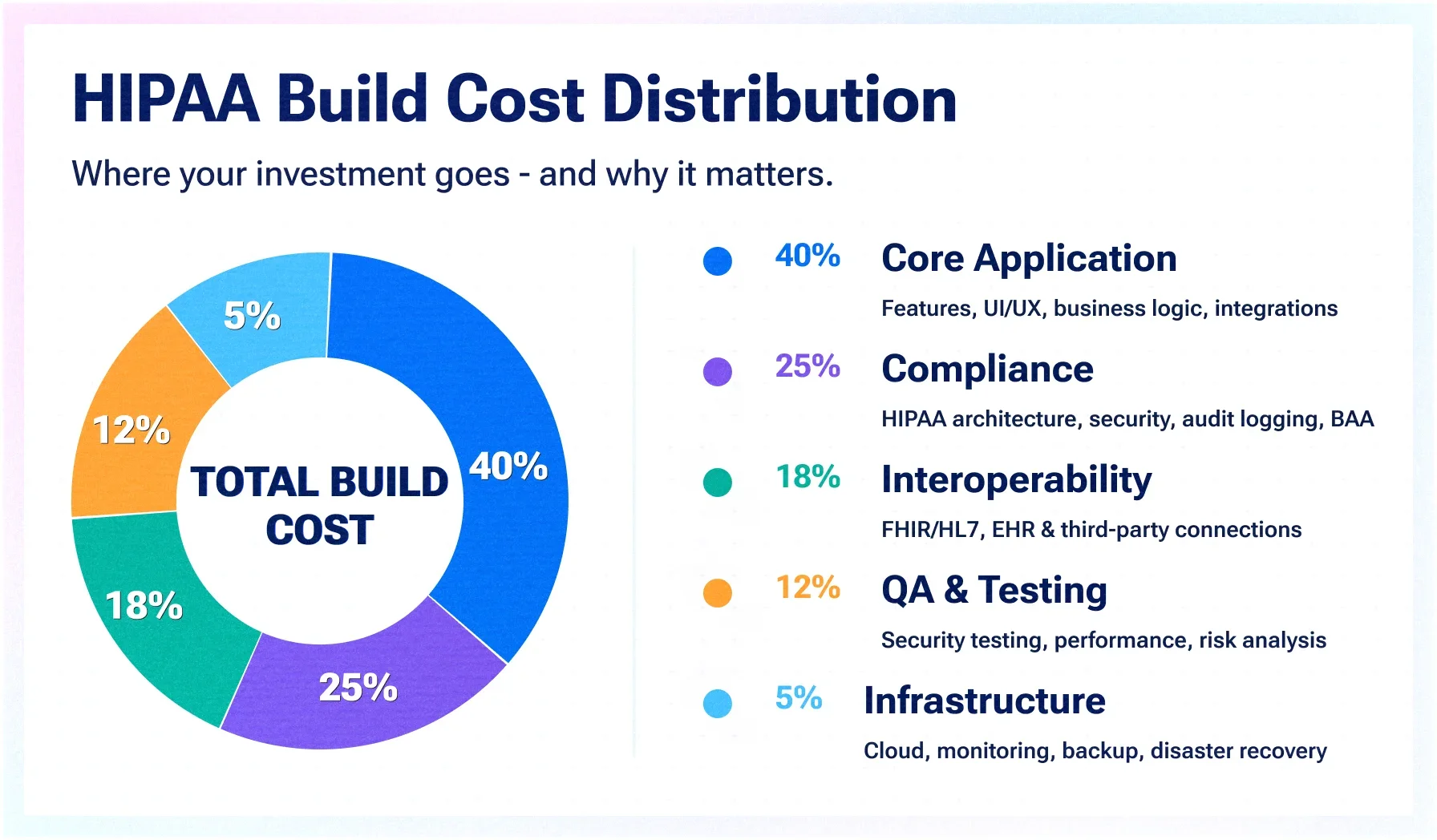
The Compliance Premium Is 20–30%, Not 200%: HIPAA adds encryption architecture, immutable audit logging, granular access control, BAA chain management, and security testing. Budgeted upfront it is a predictable line item. Retrofitted after launch it becomes a rebuild.
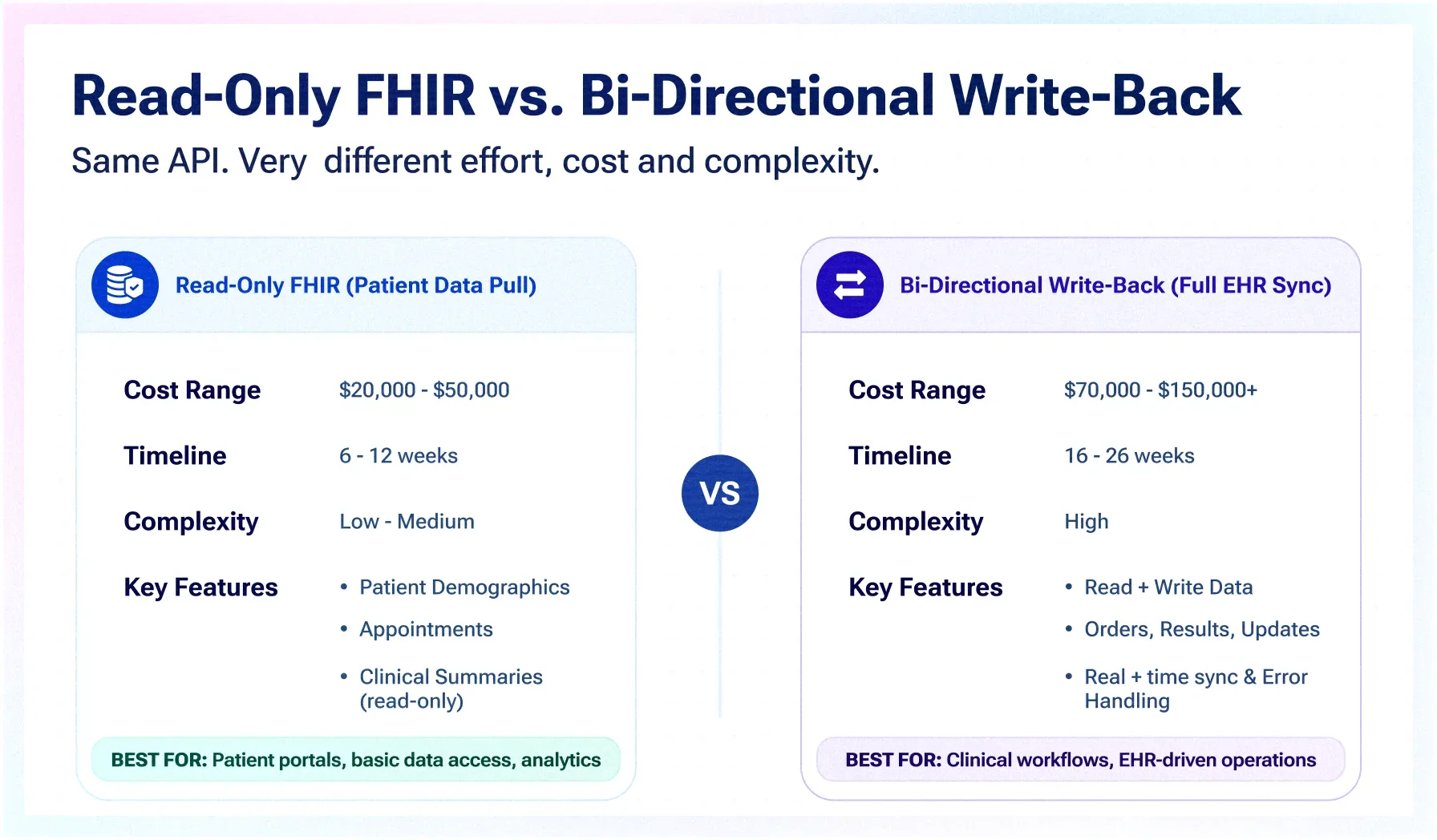
EHR Integration Is the Real Cost Variable: Read-only FHIR patient data is a fraction of the cost of bi-directional write-back into Epic or Oracle Health. The technical difficulty is rarely the API — it is vendor developer-program approval timelines, which must be started in week one, not week twelve.
Ongoing, Not One-Off: Budget 18% to 25% of build cost annually for security patching, dependency updates, penetration testing, monitoring, and audit support. Compliance is a continuous operating posture, not a launch milestone.
Why Custom Wins for Multi-Site Providers: Per-provider SaaS licensing on clinical platforms compounds with every clinic and every hire. A custom platform removes per-seat economics entirely and keeps PHI inside your own single-tenant cloud account.
Why Healthcare Software Costs More — and Where the Money Actually Goes
Clinic groups, digital health founders, and hospital innovation teams all ask the same opening question: why does a scheduling and patient-messaging platform cost more than a comparable consumer app?
The answer is not inflated engineering rates. It is that regulated software carries four cost centres that consumer software does not:
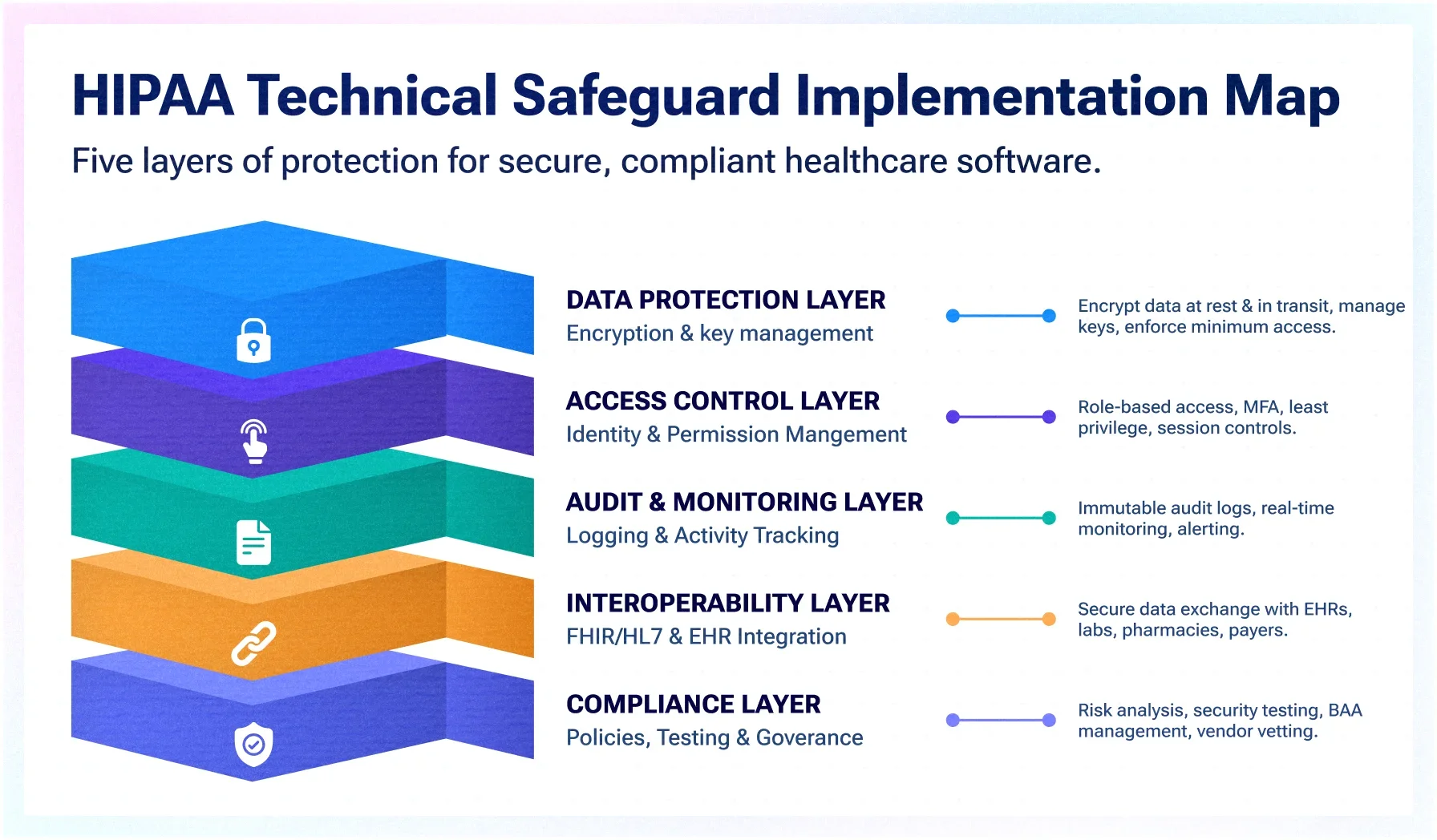
- Protected data architecture. Every PHI field requires encryption at rest and in transit, key management, minimum-necessary access enforcement, and an immutable audit trail of who accessed which record and when.
- Interoperability. Clinical systems cannot exist in isolation. They must exchange data with EHRs, labs, pharmacies, and payers using HL7v2 and FHIR R4 — each with its own conformance requirements.
- Verification burden. Test coverage, security testing, risk analysis documentation, and vendor security questionnaires from hospital procurement are engineering work, not paperwork someone does on a Friday.
-
Continuous operations. Compliance obligations do not pause after go-live. Neither does the budget.
Healthcare also consistently ranks as the most financially damaging sector for data breaches, which is why hospital and payer procurement teams scrutinise architecture before they scrutinise price. Getting this right is cheaper than getting it fast.
The 2026 Cost Tiers: What You Get at Each Investment Level
| Build Tier | Typical Investment | Timeline | What It Includes |
|---|---|---|---|
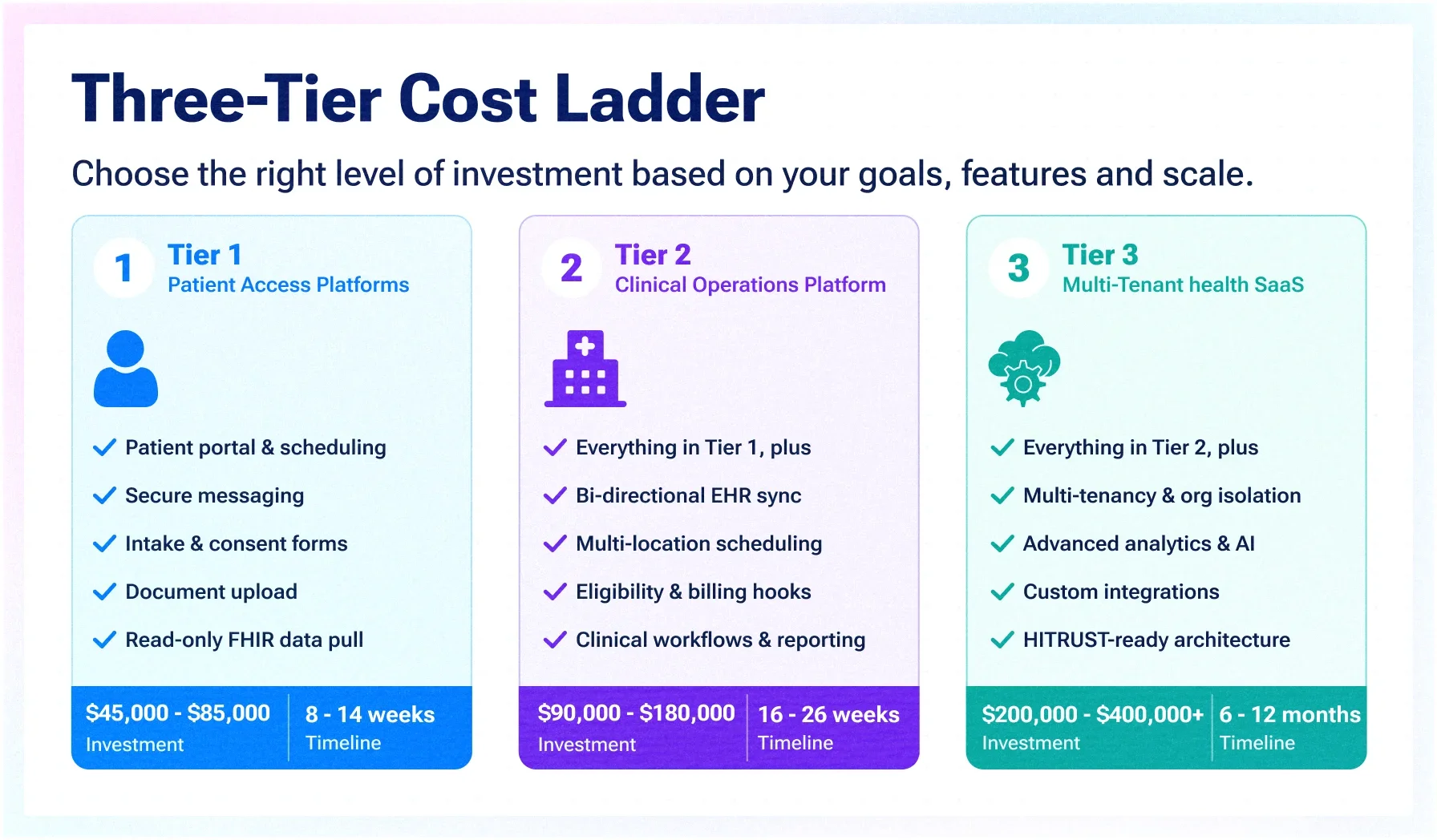
| Tier 1 — Patient Access Platform | $45,000 – $85,000 | 8 – 14 weeks | Patient portal, online scheduling and reminders, secure messaging, intake and consent forms, document upload, role-based staff console, read-only FHIR patient data pull |
| Tier 2 — Clinical Operations Platform | $90,000 – $180,000 | 16 – 26 weeks | Everything in Tier 1, plus bi-directional EHR synchronisation, multi-location scheduling and resource management, eligibility and billing hooks, e-signature, clinical document workflows, full audit and reporting layer |
| Tier 3 — Multi-Tenant Health SaaS | $200,000 – $400,000+ | 6 – 12 months | Everything in Tier 2, plus multi-tenancy and per-org isolation, multi-vendor EHR adapters, HITRUST-ready control mapping, AI clinical documentation and summarisation, SSO/SCIM provisioning, analytics warehouse |
Cost variables that move these numbers most:
| Variable | Cost Impact |
|---|---|
| Read-only FHIR vs. bi-directional write-back | Write-back typically adds 40–70% to integration scope |
| Number of distinct EHR vendors supported | Each additional vendor adapter is a discrete workstream |
| HIPAA controls layer | 20–30% of total build effort |
| Telehealth (video, recording, consent capture) | Adds a dedicated workstream plus recurring platform fees |
| Native mobile apps vs. responsive PWA | PWA typically removes 25–40% of client-side cost |
| HITRUST / SOC 2 evidence readiness | Additional programme cost beyond the software build |
| Ongoing maintenance & compliance operations | 18–25% of build cost per year |
| HIPAA-eligible cloud hosting with BAA | $900 – $2,500 per month depending on workload |
The Compliance Architecture: What "HIPAA-Compliant" Actually Means in Code
EHR Integration: Where Healthcare Projects Actually Slip
Integration is the single largest source of schedule risk in healthcare builds, and almost none of it is code complexity.
- FHIR R4 is the baseline, but HL7v2 has not gone anywhere. Modern patient-facing data exchange runs on FHIR R4 with SMART App Launch. Inside hospital networks, ADT feeds and lab results still travel over HL7v2 interfaces. A realistic integration plan supports both.
- Vendor developer programmes gate your access, and approval takes time. Epic and Oracle Health both route third-party API access through their own developer programmes with sandbox credentials, client-ID registration, and review steps. Epic's vendor programme carries a modest annual fee, with marketplace listing priced separately — but the meaningful cost is calendar time, not dollars. Start the registration in week one of discovery. Teams that treat it as a pre-launch task lose six to ten weeks.
- Read-only and write-back are different cost classes. Pulling demographics, problems, medications, allergies, and results is a well-trodden path. Writing appointments, documents, or orders back into a production clinical system requires additional conformance work, health-system sign-off, and a longer validation cycle. Decide which you need before you budget — the difference is material.
- Each health system is its own deployment. Even with identical EHR vendors, configuration differs by site. Budget onboarding effort per health system, not per vendor.
Our 6-Phase HIPAA Delivery Framework
Phase 1 — Risk Analysis & PHI Data-Flow Mapping. Before a line of code, we document exactly what PHI enters the system, where it rests, who touches it, and where it leaves. This artifact drives architecture and satisfies the first question in every security review.
Phase 2 — Data Minimisation & Schema Design. PHI you do not store is PHI you do not have to defend. We design for the minimum necessary, isolate identifiers, and separate clinical data from operational telemetry.
Phase 3 — Secure Architecture & BAA Chain. Single-tenant infrastructure provisioned as code on HIPAA-eligible cloud, with signed BAAs across every subprocessor. Vendor selection for email, SMS, video, analytics, and storage is a compliance decision, not a convenience one.
Phase 4 — Build with Controls Embedded. Audit logging, RBAC, and encryption are written alongside features, in the same sprints. They are never a hardening pass at the end.
Phase 5 — Security Validation. Third-party penetration testing, a HIPAA Security Rule gap assessment, dependency and container scanning, and a completed security questionnaire pack ready for hospital or payer procurement.
Phase 6 — Go-Live & Continuous Compliance. Monitoring, alerting, patch cadence, scheduled access reviews, and annual re-testing under a maintenance retainer.
Real-World Proof: Automating Clinical and Insurance Scheduling
In our Appointment & Insurance Automation Case Study Suave Creators replaced manual, phone-and-spreadsheet appointment coordination with an automated scheduling and qualification workflow — cutting administrative handling time and eliminating the double-entry that drives both staff burnout and data-integrity risk in patient-facing operations.
The same engineering principles carry into our wider healthcare work: single source of truth, role-appropriate access, automated workflows in place of manual coordination, and data that stays in the client's own environment. See our Healthcare Software Development practice for the full delivery model.
Build Healthcare Software Your Compliance Officer Can Actually Sign Off
Regulated software is not harder to budget — it is harder to budget late. Mapped upfront, HIPAA architecture is a known line item. Discovered during a security review, it is a rebuild.
Explore Our Healthcare Engineering Practice: Visit our Healthcare Software Development hub.
Scope Your Build: Schedule a free healthcare discovery consultation with a senior software architect.